
You know the number. You've stared at it for weeks, maybe months. Same weight on the bar, same reps, same grinding rep five that never quite gets easier. You've changed your program twice. You've watched the YouTube videos. You've told yourself "I've tried everything."
I want to challenge you on that, because I don't think you have.
Here's the uncomfortable truth I've watched play out with client after client: most plateaus aren't a training problem. They're a standards problem. Somewhere along the way, without ever deciding to, you redefined what "hard" means. The weight that used to make you doubt whether you'd get the last rep now just... happens. You show up, you move the bar, you leave. It feels like effort because it used to be effort. But your nervous system knows the difference even when your ego doesn't.
That's not a training failure. That's drift. And it's fixable — but only if we're honest about what actually stalled you before we talk tactics.

Why Plateaus Actually Happen
The textbook answer is that your body adapted. True, but incomplete, and honestly a little bit of a cop-out. Adaptation is supposed to happen — that's the entire point of training. The real question is why you stopped giving your body a new reason to adapt.
The principle underneath all strength progress is simple: your body only changes in response to a demand it hasn't successfully met before. That's progressive overload, and it's not just about adding weight to the bar. It's about consistently presenting a stimulus your body has to respond to. When that stimulus stops increasing — even slightly, even without you noticing — progress stops too.
And here's where the standards problem sneaks in. Effort is one of the hardest things to judge about yourself, because "hard" is relative to the last thing you did. If you've been training at the same intensity for months, that intensity starts to feel like your ceiling. You're not lying to be lazy — you're lying because your brain calibrated to what's familiar, not what's true. That's why the plateau feels like a wall instead of a warning sign. It's not that you can't push harder. It's that you've quietly stopped checking whether you are.
The fix isn't more motivation. It's more honesty, backed by structure that doesn't let you lie to yourself anymore.
1. Redefine What "Hard" Actually Means
Stop asking "did that feel hard" and start asking "how many more reps could I have done." That's the difference between vague self-assessment and something closer to the truth. Rate every working set on how many reps you had left in the tank. If you're consistently leaving four or five reps on the table and calling it a hard set, that's your answer right there. This one change — just tracking reps-in-reserve honestly — exposes more plateaus than any program swap I've ever seen.
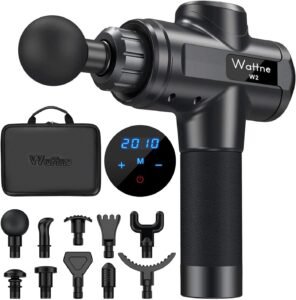
For when heat or ice just won’t do.
Muscle Massage Gun, Deep Tissue Percussion Massager for Body Relaxation
Portable Handheld Sport Massagers with Case, Quiet & Powerful Brushless Motor, 20 Speed Level, Gifts for Men Women,2. Change the Stimulus, Not Just the Number
If your body has fully adapted to a rep range, a tempo, a movement pattern, adding five more pounds isn't going to shock it back into growth. Sometimes the move isn't heavier — it's different. Shift rep ranges for a block. Slow the eccentric down. Swap the variation while keeping the same movement pattern. You're not abandoning the lift; you're giving your body a new problem to solve, because the old one stopped being a problem a while ago.
3. Audit the Recovery You've Been Ignoring
I'll say something a lot of people don't want to hear: your programming might be fine. Your sleep might be the actual ceiling. Strength isn't built in the gym — it's built in the recovery between sessions, and if you're chronically under-slept or under-fueled on protein, you can train perfectly and still stall, because your body doesn't have the raw material to adapt. If you haven't looked honestly at your sleep and your recovery inputs, that's worth doing before you touch your program again. (If you want to go deeper on this, I've written more on recovery science over in Beyond the Bloodwork.)
4. Periodize Instead of Grinding
Training the same intensity every single week isn't discipline — it's a slow leak. Real progress comes in waves: build, push, deload, rebuild. A planned deload isn't giving up ground; it's setting up the next block to actually work. If you've been grinding flat-out for months with no planned lighter weeks, your body has likely been quietly fighting off fatigue instead of building strength, and that fight is what you're mistaking for a plateau.
5. Track Objectively, Not by Feel
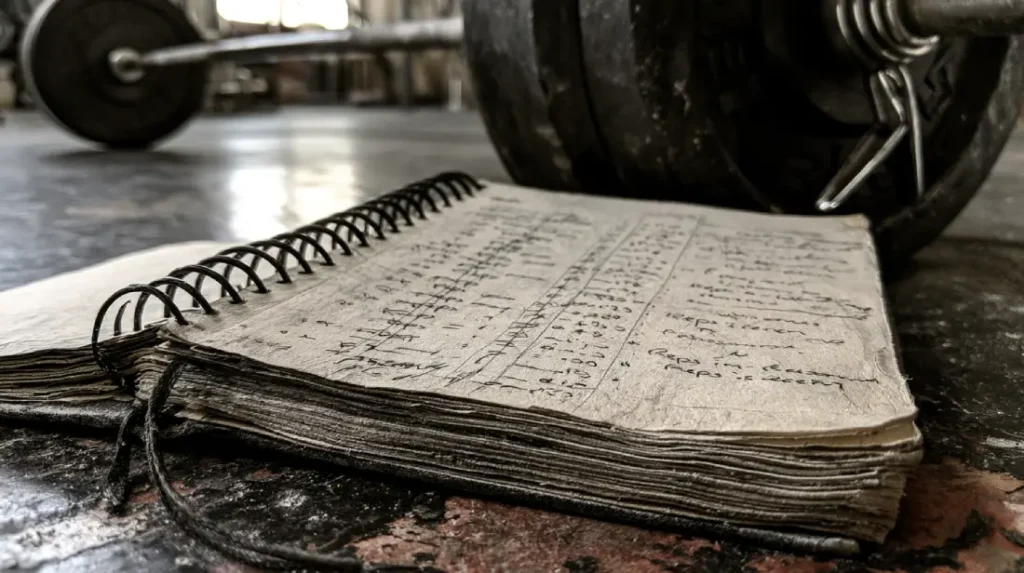
Feel lies. It's not malicious — it's just how humans work. We adapt to discomfort and start calling it neutral. A logbook doesn't have that problem. Write down the weight, the reps, the reps-in-reserve, every session. When you can look back at eight weeks of numbers instead of eight weeks of vague memory, the plateau either shows up in black and white or it turns out it was never really there — you were just training on autopilot and assuming autopilot was effort.
The Real Question
A plateau feels like a ceiling. Most of the time, it's actually a mirror. It's showing you where you quietly agreed to stop pushing, weeks or months before you noticed the number stopped moving.
So before you change one more thing about your program, sit with this:
When's the last time a set actually scared you a little?
Are you training to feel comfortable, or are you training to get stronger — and are those the same thing right now?
If you couldn't lie to yourself about effort for one week, what would you actually do differently?
The bar isn't the problem. It never was. It's just been waiting for you to stop lying to yourself about what you're bringing to it.
If you're a man here in Kamloops who's tired of guessing where your training actually stands, that's exactly the conversation I have in a free consultation. No sales pitch — just an honest look at what's really stalling you, and what it'd take to break through it. Book your consultation here.
FAQ Section
What actually causes a strength plateau? Usually not the program itself — usually effort drift. Without realizing it, you stop pushing as hard as you used to, and the weight that once demanded real effort starts to feel routine.
How long should I wait before changing my program? If you've honestly tracked reps-in-reserve for three to four weeks and still aren't progressing, that's the point to adjust the stimulus — not before you've confirmed your effort was actually maxed.
Is a plateau a sign I need to deload? Sometimes. If you've trained hard for months with no planned lighter weeks, accumulated fatigue could be masking itself as a plateau. A deload can reveal whether that's what's really going on.
Should I add more weight or change my program to break a plateau? It depends on what actually stalled. If effort has quietly dropped, fix that first. If effort is genuinely maxed, changing the stimulus — rep range, tempo, or exercise variation — usually works better than just adding weight.