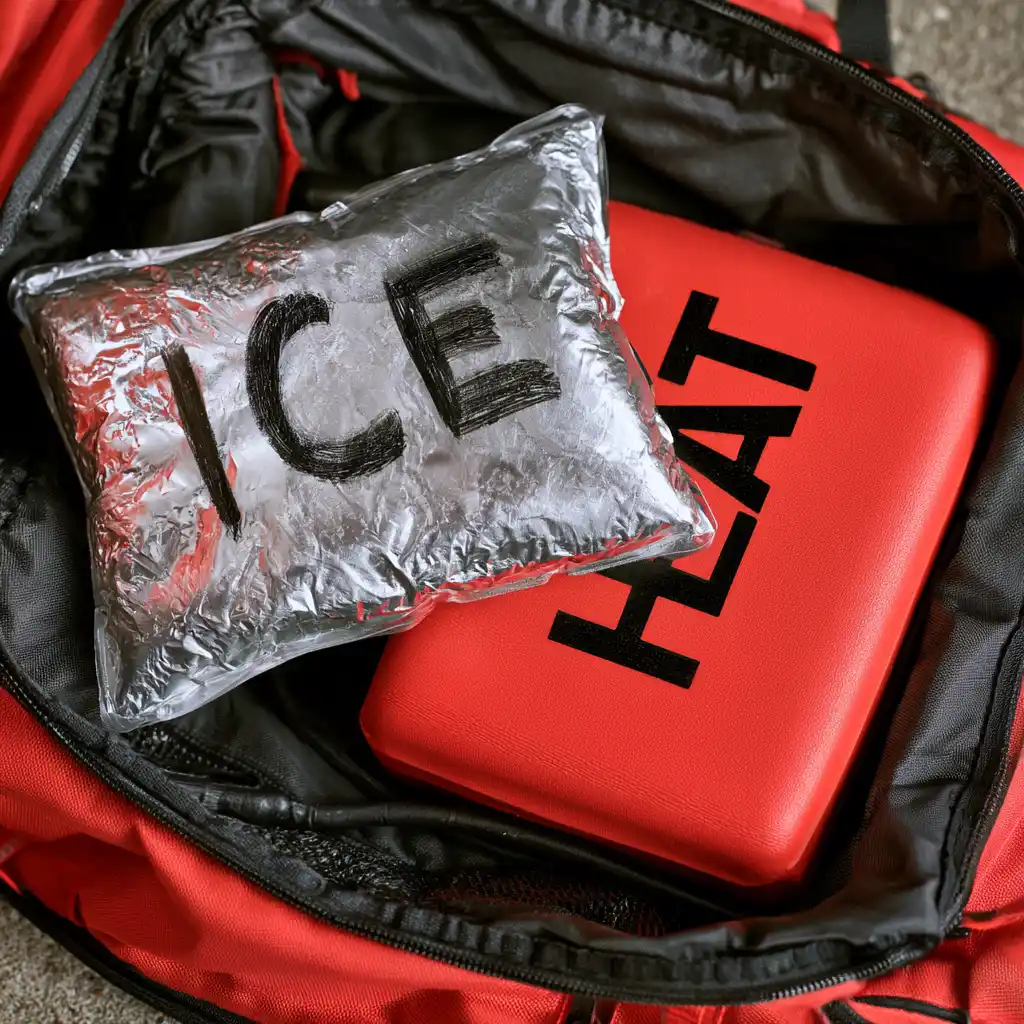
I used to do it without thinking. Roll an ankle, tweak something on a heavy set — straight to the ice pack, no hesitation. I assumed cold meant control, and control meant recovering faster. Ice vs. heat for recovery never felt like a real question to me. Ice won by default.
I was wrong. So was almost everyone who taught me that habit.
The man who invented the RICE protocol — the exact advice I grew up on — spent years walking it back. Not adjusting it. Reversing it. He came to believe the swelling he told a generation of athletes to freeze away wasn't the injury. It was the repair crew showing up for work.
This isn't really about picking a side. It's about understanding what your body is doing when it hurts, so you stop working against it by accident.
The Reflex Nobody Questions
RICE — rest, ice, compression, elevation — has been locker room law since 1978. Dr. Gabe Mirkin coined it, and it spread fast because it was simple and it felt right. Every coach, trainer, and gym buddy passed it down without a second thought.
Here's what most of them never heard. Mirkin himself reversed his position on ice years later. He said plainly that anything which blocks inflammation also blocks healing, because inflammation isn't the damage. It's the delivery system for the repair.
That single fact should change how you think about every ice pack you've ever reached for.
Why the Old Advice Still Wins
Ice feels productive. It numbs pain fast, it looks disciplined, and for a lot of guys, the ice bath has become a badge — proof you take recovery seriously.
That's the trap. Feeling better and healing better are not the same thing, and most men have never been taught to tell the difference. Reaching for whatever brings the fastest relief is easy. Understanding what your body actually needs takes more effort, and it doesn't make for a good post.
Ready to Level Up?
If you’re serious about building real confidence, discipline, and strength — in both body and mind — this is where it starts.
Most men don’t need more information. They need a plan, and someone who’ll hold them to it.
Book a focused 30-minute consultation — $39 — where we get clear on where you actually stand, what’s been getting in the way, and what a real game plan looks like for you.
This isn’t a sales call. It’s a working session. Come ready to be honest.
What's Actually Happening in the Tissue
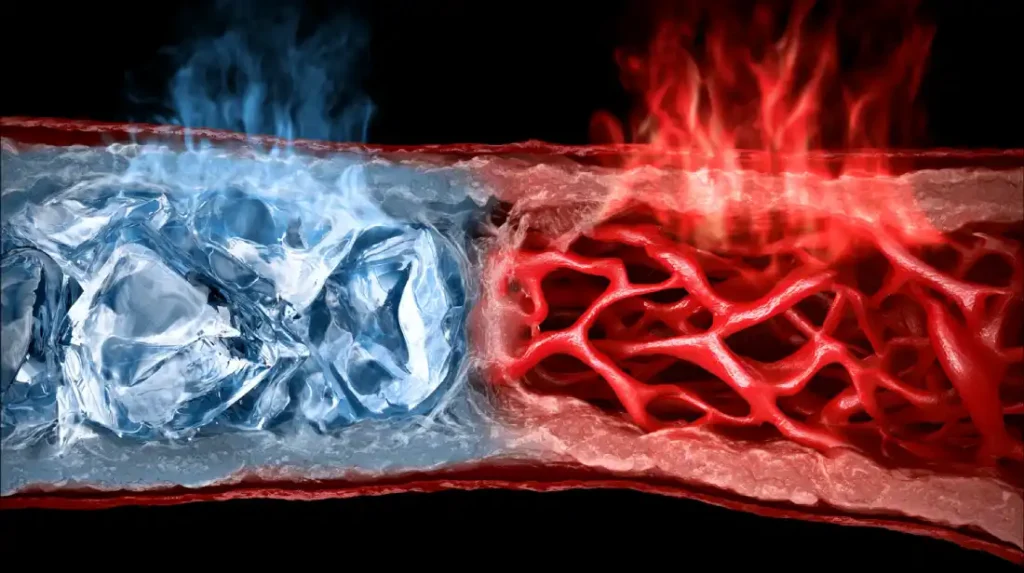
When you get hurt, your blood vessels open up. Immune cells move in. Growth factors arrive to start rebuilding the tissue. That process is loud, it's uncomfortable, and it's exactly what needs to happen.
What ice actually does. Ice therapy narrows those same blood vessels. Less blood flow means less swelling and less pain — which is genuinely useful in the short term. It also means fewer repair cells reaching the area while the ice is on.
What heat actually does. Heat therapy does the opposite. It opens the vessels, brings more blood to the area, and helps clear out the waste products that build up after hard training. That's why it loosens tight muscle and eases stiffness that ice never touches.
The clinical world has caught up to this. RICE has largely been replaced by a framework called PEACE & LOVE — protection, elevation, avoiding anti-inflammatories, compression, and education first, then load, optimism, vascularization, and exercise. Ice isn't even part of it. The goal shifted from suppressing the response to supporting it.
Here's the part that matters most if you train seriously. Repeated cold exposure right after lifting — the habitual ice bath after every session — may blunt the same signaling your muscles use to adapt and grow. You're not managing recovery in that case. You're interrupting it.
The Simple Rule and How to Use Each Tool
Sharp, sudden, and swollen — that's ice. Achy, stiff, and been-there-a-while — that's heat. A fresh ankle roll gets ice. Two weeks of tight lower back gets heat.
When you do use ice, keep it to 15 to 20 minutes, with a towel between the pack and your skin, and real gaps between sessions. Constant icing doesn't speed anything up. It just extends the interruption.
Building a smart gym first aid kit. Instant ice packs earn their spot in your bag for anything acute that happens away from home. Reusable ice packs for injuries work better at home, where consistent cold matters more than convenience. A simple cold compress for muscle pain covers general soreness without overcomplicating it, and a set of reusable hot and cold packs gives you both tools without doubling your kit.
Back pain specifically. Hot and cold packs for back pain aren't interchangeable — the right call depends on what's actually going on. A fresh strain gets ice for the first day or two. Ongoing tightness responds better to heat, which is where most back pain hot and cold treatment gets misapplied. Men reach for ice out of habit long after the injury has passed into the stiffness phase.
For anyone training for size or strength. Skip the reflexive ice bath after lifting. Save cold for genuine injuries, not as a routine bolt-on to every session. If growth is the goal, don't ice the exact process that produces it.
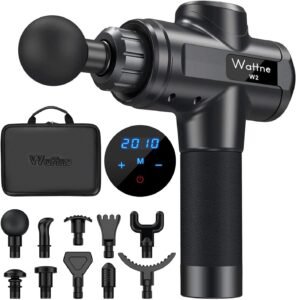
For when heat or ice just won’t do.
Muscle Massage Gun, Deep Tissue Percussion Massager for Body Relaxation
Portable Handheld Sport Massagers with Case, Quiet & Powerful Brushless Motor, 20 Speed Level, Gifts for Men and Women
Stewardship, Not a Shortcut
Managing pain and supporting healing are two different jobs. Ice does the first one well. It was never built to do the second.
The discipline isn't in reaching for whatever brings the fastest relief. It's in knowing which job you're actually doing, and picking the tool that matches it. That's a small shift, but it changes how you treat your body every time something hurts — from a reflex into a decision.